Feature Release: env0 has released an integration with Azure DevOps, allowing teams to automate the provisioning and management of cloud resources directly from Azure DevOps. This integration is useful for implementing gitops workflows, providing self-service provisioning for developers, and enforcing governance and compliance controls.
Terraform alone isn't enough. To ensure best practices, questions such as "How do we enforce policies?", "How do we lint our code?", and "How do we harden infrastructure security?" must be answered. Here are the top 4 essential Terraform tools that you should consider using in 2023 to enhance your infrastructure management process.
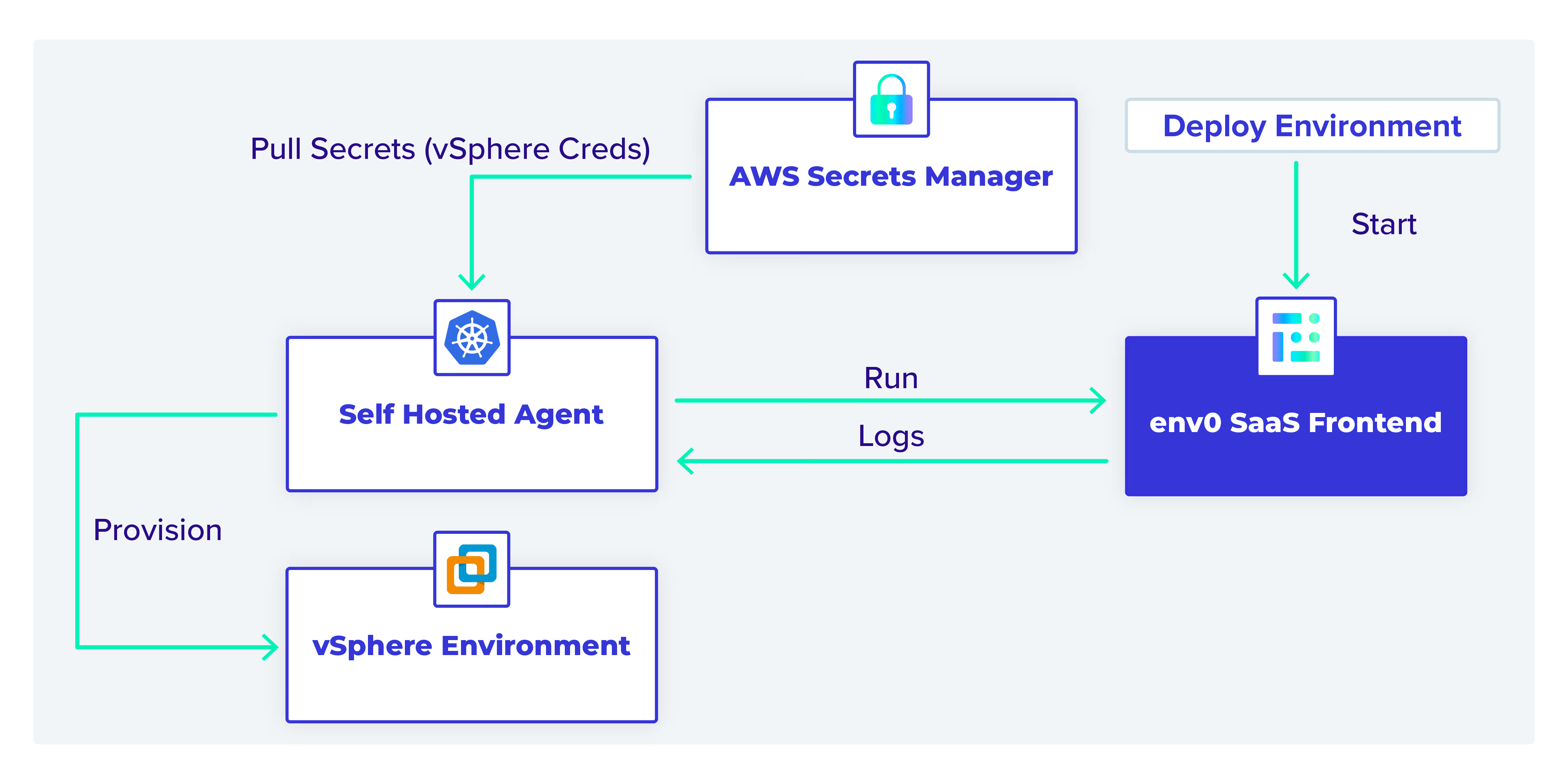
Infrastructure as Code (IaC) is widely used to deploy into clouds like AWS, Azure, and GCP. It can also be used to manage on-premises VMware vSphere infrastructure. This step-by-step walkthrough and video tutorial shows you how to use env0 with a self-hosted agent to manage on-premises VMware infrastructure directly.
In a world where infrastructure is constantly changing and evolving, it's more important than ever to have tight controls over who can make what changes. Granular RBAC allows you to give each user only the permissions they need to do their job, nothing more. This reduces the potential attack surface of your infrastructure and helps to prevent breaking changes.
In this post we’ll take a look at why auditing is necessary for Infrastructure as Code, the benefits of having an audit trail for Terraform and other IaC frameworks (such as Terragrunt, Pulumi, CloudFormation, Kubernetes, and others), and share how you can automate your audit trail easily with env0.
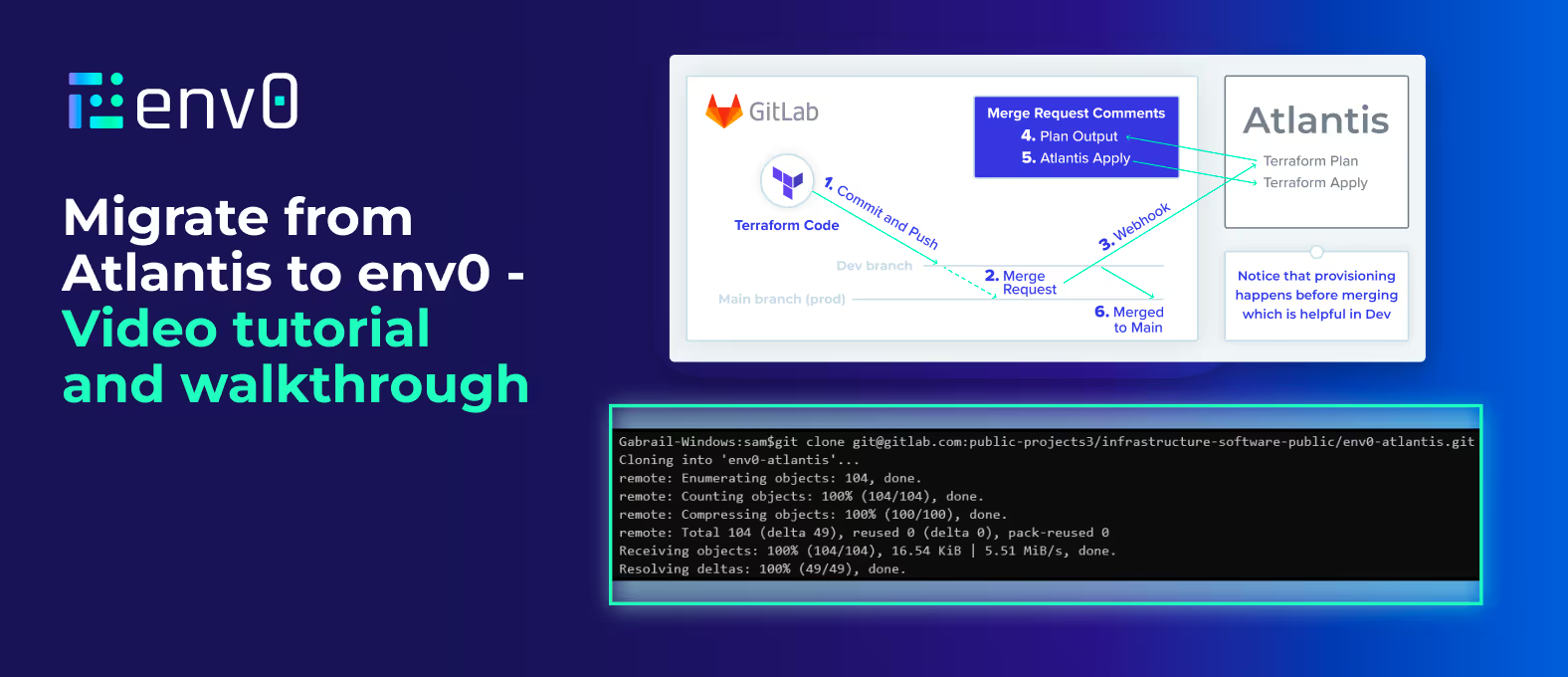
In this video, we'll go through some background on Atlantis and then show you how to migrate from Atlantis to env0, including using the env0 remote backend for Terraform state storage.
The rise of Infrastructure as Code has revolutionized the management of infrastructure and the way we provision and maintain platforms for application deployment. Rather than manually deploying infrastructure through a CLI or GUI, we can now treat our infrastructure in the same way we treat our applications.
In this video series, we’re looking at the most common barriers to Infrastructure as Code (IaC) adoption. We know that cloud security is a prominent concern for many organizations, so in this video Marino Wijay, Developer Advocate at Solo.io, joins us to share his take on the biggest factors impacting cloud security when implementing IaC.
In this video series, we’re looking at the most common challenges with Infrastructure as Code (IaC) adoption and scaling. In this episode, we examine the factors around extensibility and integrations when you’re looking to scale your Infrastructure as Code.
How many of you have started with Terraform and discovered you need the same code to build multiple environments? Perhaps a dev, stage, and production environment? After researching Workspaces, Branches, and Terragrunt, you aren’t completely satisfied and want to know if there is another way. If you are here, I’ll assume that’s you!
Learn more about Terraform variables, terraform module variables, and ways to DRY out your code with some examples of how to build complex variable hierarchies.
There are many reasons why teams struggle with adopting Infrastructure as Code (IaC). In this five-part series, env0 CEO Ohad Maislish and Developer Advocate Tim Davis discuss the top five reasons we see most frequently.
Workflows solve the problem of provisioning complex infrastructure resources that have dependencies, and using multiple frameworks for your infrastructure-as-code.
Let us never forget that DevOps is about culture, people, and process, not just tools or technology. Software may enable good culture and behavior. But technology brings a benefit if and only if it diminishes a limitation. And the most important limitations to address are the explicit and implicit rules that uphold the status quo, or “doing it the way we always have.”
DevOps engineers sometimes need to perform one-off commands on their Terraform code or state. For example, “terraform import” or “terraform state rm”, or any other Terraform or bash commands. The problem is that it is dangerous to allow users to work directly from a terminal.
If you have deployed anything with an Infrastructure as Code framework (Terraform, Pulumi, etc…) recently, then you have interacted with a state file, and may not have even known it! So, what is the state file? Why is it important? What should you do with it? These are some of the most asked questions when it comes to Infrastructure as Code management. So, let’s get into it!