.webp)
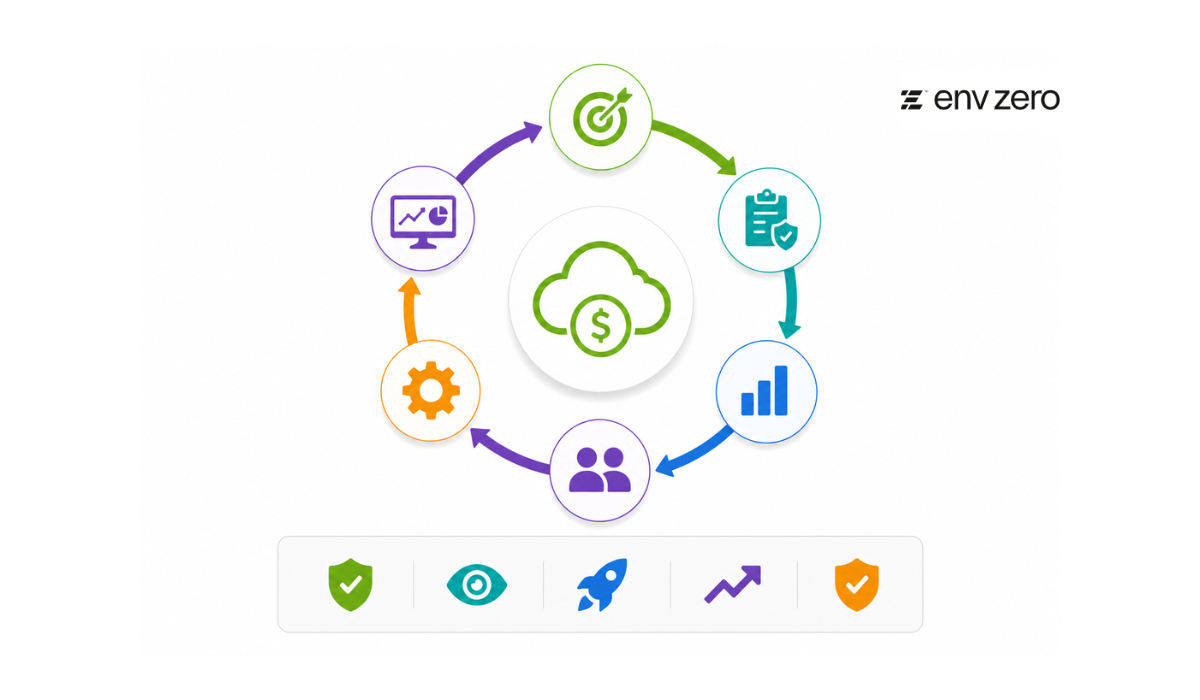
A FinOps governance framework is not the technical cost controls themselves — tagging, budget thresholds, cost estimation — those live in the Cost Governance Model. This framework covers the organizational layer on top: who is accountable for spend, how cost gets allocated back to teams, and how a FinOps practice matures over time. For the plain-language version, see FinOps Controls in Platform Engineering.
Three structural pieces make up that layer: an accountability model, an allocation approach, and a maturity target.
Build the Accountability Model
The first structural piece is deciding, explicitly, who is responsible for what — rather than assuming it will sort itself out once the technical controls exist.
- Platform teams own the technical guardrails: tagging standards, budget alerts, approval workflows, and the templates teams provision from.
- Engineering teams own responding to cost signals for the environments they run, within those guardrails.
- Finance teams own setting budget expectations and translating cloud spend into business reporting.
- Leadership owns approving unusual spend and setting the organization's overall risk tolerance for cost versus speed.
- Operations teams own surfacing underused or abandoned infrastructure that falls outside any one team's daily attention.
The recurring failure mode isn't any one of these roles being wrong — it's shared infrastructure (networking, observability, shared clusters) that doesn't map cleanly to any single owner. That gap should be assigned explicitly, not left to whichever team notices the cost first.
Choose an Allocation Model: Chargeback or Showback
Once ownership is defined, the framework needs a decision about how cost gets attributed back to teams. This isn't just a definitional choice, it's a rollout sequencing decision.
Start with showback when tagging is inconsistent, allocation rules for shared infrastructure aren't agreed on yet, or organizational buy-in is still forming. Showback reports cost back to teams without billing them for it, which builds awareness and trust in the underlying data at low organizational cost.
Move to chargeback once tagging is enforced, shared-cost allocation rules are fair and agreed upon, and the team receiving the bill has enough control over its own spend to act on it. Chargeback creates a real financial incentive, but only works where the allocation is defensible — introducing it before the data is trustworthy just creates disputes.
Most organizations run both at once: showback for cost categories where allocation is still ambiguous, chargeback for teams and categories where it's clear enough to be fair.
Set a Maturity Target
The framework's third piece is knowing which stage the organization is actually aiming for, since the accountability model and allocation approach above look different at each stage.
StageAccountabilityAllocationGovernance behaviorCrawlOwnership assumed, not assignedNo allocation modelReactive; reviews happen after a surprising billWalkRoles defined per team/projectShowback in regular useReviews on a defined cadence, not just after incidentsRunRoles defined including shared infrastructureChargeback where allocation is fairCost is a factor in architecture decisions, not an afterthought
Most platform teams sit between Crawl and Walk. The jump to Run depends on the technical controls in the Cost Governance Model already being solid — chargeback and unit economics both require tagging and reporting to be trustworthy first.
Common Mistakes When Applying This Framework
The most common failure isn't picking the wrong allocation model — it's introducing chargeback before the accountability model and tagging discipline underneath it are solid, which turns a cost-control initiative into a series of billing disputes.
A close second is leaving shared infrastructure ownership undefined. If no one explicitly owns cost accountability for the shared Kubernetes cluster or the shared networking layer, that cost either gets silently absorbed by the platform team's budget or never gets reviewed at all.
The third is treating the maturity target as a one-time decision rather than something to revisit. An organization that's genuinely at Walk shouldn't force chargeback everywhere just because a mandate said to; it should expand chargeback to the teams and categories where the allocation is actually fair, and stay at showback for the rest.
Best Practices for FinOps Governance
Assign the Shared Infrastructure Owner Explicitly
Don't leave this as the one role nobody claims. Someone — usually platform — needs to own reviewing shared-service cost even though no single team's budget absorbs it directly.
Don't Skip Showback
Chargeback introduced before the underlying cost data is trusted creates disputes, not accountability. Showback first builds the trust chargeback depends on.
Revisit the Maturity Target on a Cadence
Review which stage the organization is actually at, not which stage it was assigned to be at eighteen months ago.
Keep Finance and Platform Jointly Accountable
The accountability model only works if finance and platform review it together, not if platform builds the guardrails and finance discovers the results in a quarterly report.
Conclusion
A FinOps governance framework is the organizational layer that decides who is accountable for cloud spend, how it gets allocated back to teams, and what stage of maturity the organization is actually operating at — the technical controls underneath it are a separate, necessary piece, not this one.
The goal is not only to lower spending. The goal is to make sure cost decisions have a clear owner and a rollout plan that matches where the organization actually is, not where a mandate says it should be.
FinOps is the cost-specific piece of a larger system — see Cloud Governance Framework for how it fits alongside policy, risk, and accountability controls.
FAQs
What is a FinOps governance framework?
A FinOps governance framework is the organizational model — accountability, allocation approach, and maturity target — that determines how a FinOps practice runs, distinct from the technical cost controls (tagging, budgets, alerts) that support it.
How is FinOps governance different from cost governance?
Cost governance covers the technical mechanics: estimating, tagging, and monitoring spend. FinOps governance covers who's accountable for that spend, how it gets allocated across teams, and how mature the organization's practice is. The two work together but solve different problems.
How do you decide between chargeback and showback?
Start with showback if tagging is inconsistent or shared-cost allocation isn't agreed on yet. Move to chargeback once tagging is enforced and the allocation model for a given team or cost category is fair enough to defend.
Who should own FinOps governance?
No single team should own it alone. Platform owns the guardrails, engineering operates within them, finance sets expectations and reports on actuals, and leadership sets risk tolerance — the framework's job is making sure all four know which part is theirs.